Buying Guides
Small vs. Full-Size Vibrators: Which Fits Your Everyday Life?
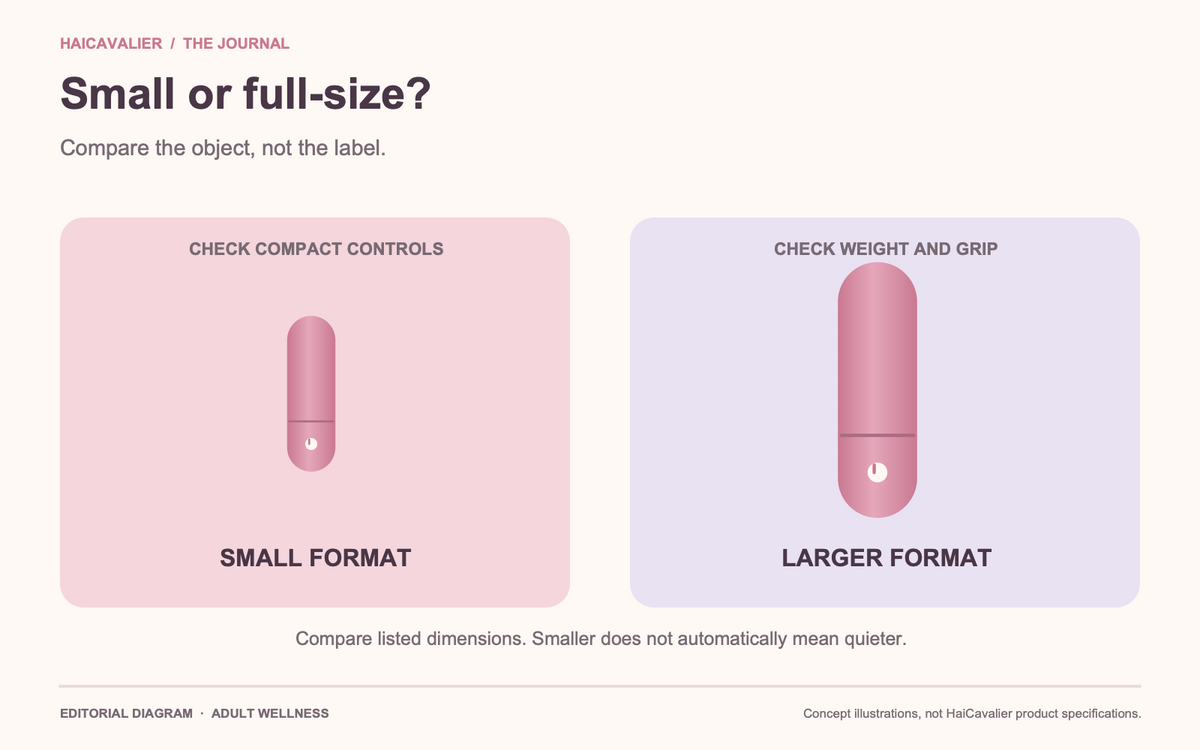
A small vibrator generally trades storage space for less room around the grip and controls; a larger model may reverse that trade-off. Actual dimensions and layout matter more than the labels.
Neither body size establishes intensity, noise, runtime or whether the product suits a beginner.
Separate overall size from useful dimensions
“Mini” and “full-size” are marketing labels, not standardized measurements. Two products sold as mini can be quite different.
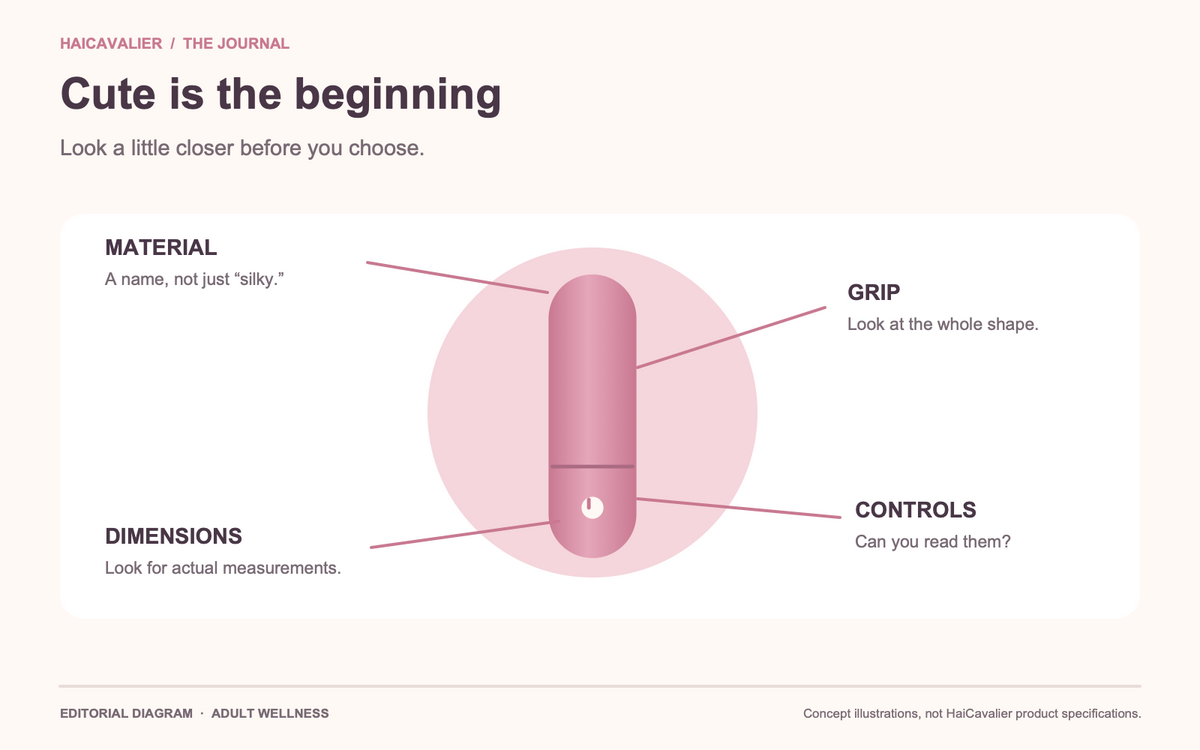
Read the length, width and weight for each model. Then look at where that size is distributed. A long handle with a small head is different from a short, wide device, even if their total measurements look similar on a chart.
For internal products, use the stated insertable dimensions rather than treating total length as the relevant measurement. For external products, pay attention to the head and grip.
Think about your hand
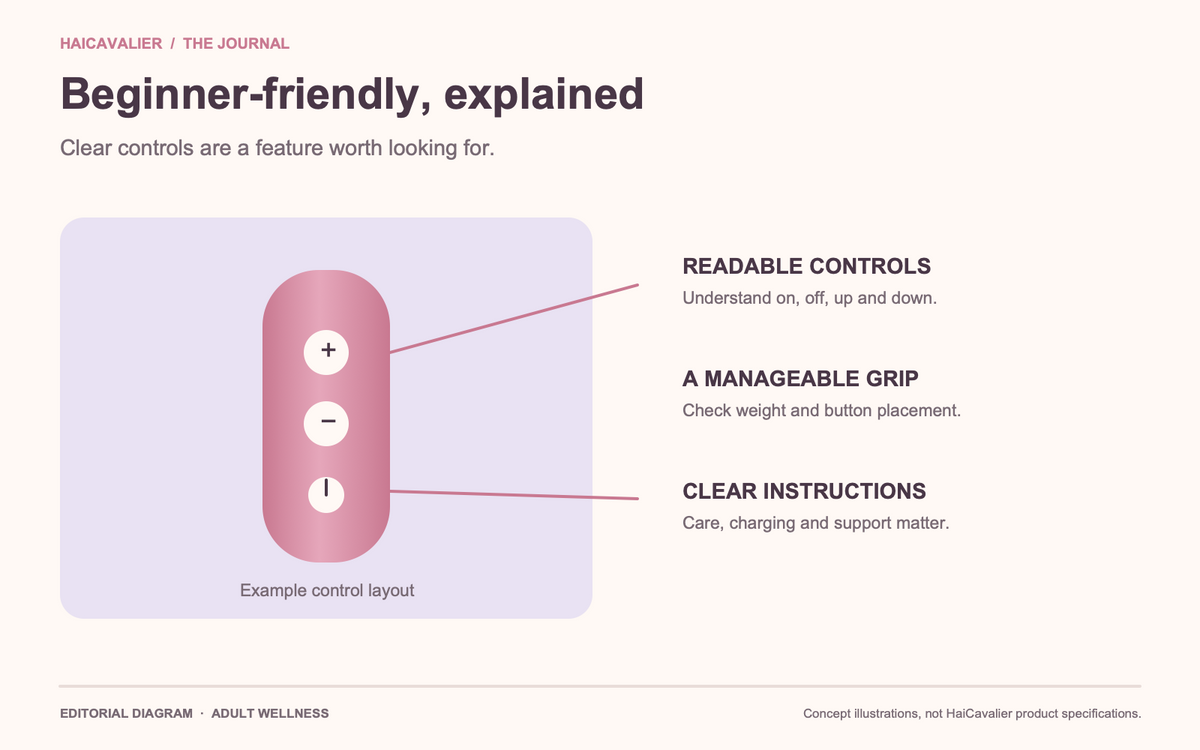
A compact product may be easy to tuck away but harder to hold for some people. Small buttons can also be difficult to distinguish by touch.
A larger handle might offer more room for separate controls. It might also feel heavier or less convenient to store. Neither trade-off is automatically better.
Look for photographs showing the entire device from the side and back. If a retailer provides only a front view, you may be missing the part of the product that matters most to your grip.
Do not predict power from the silhouette
You cannot reliably rank two products by appearance alone. Motor design, materials, settings and intended use all matter.
The same caution applies to noise. A small device is not automatically quieter, and a larger one is not automatically loud. If sound is a deciding factor, look for model-specific information and the conditions under which any measurement was taken.
Size is useful for comparing physical fit in your life. It is a poor substitute for the specifications you actually need.
Measure your storage space
A small pouch or bedside compartment may make compact models attractive. Check whether the storage space also accommodates the cable and any removable pieces.
With a larger product, decide where it will go before it arrives. If you would need to bend a cable sharply or cram the device into a crowded drawer, a different arrangement could be easier to maintain.
Keep storage instructions in the comparison. The smallest product is not necessarily the simplest to care for.
Consider charging and travel separately
A bigger body does not guarantee longer battery life. Compare stated runtime, charging time and the included charging equipment for the exact models.
For travel, check whether the product has a lock, how it switches off and whether it can be protected from accidental activation. “Travel-size” does not answer any of those questions by itself.
Choose the compromise you prefer
If compact storage matters most, a small vibrator may make sense. If grip and widely spaced controls are your priorities, a larger format deserves a look.
Write down your two non-negotiables and compare actual products against them. You are choosing something that fits your routine, not taking sides in a size debate.
Choose according to the constraint you actually have
If the constraint is a shallow drawer, compare packed height with the case and accessories included. If it is difficulty reaching small buttons, compare the usable handle and control spacing instead.
A longer narrow handle might solve the second problem while fitting the first space better than a short wide body.
Keep these priorities separate on your shortlist. “Smallest overall” can be the wrong answer when the dimension you need to reduce is width or when more holding space matters most.