Buying Guides
Air Pulse vs Suction Vibrators: What's the Difference?
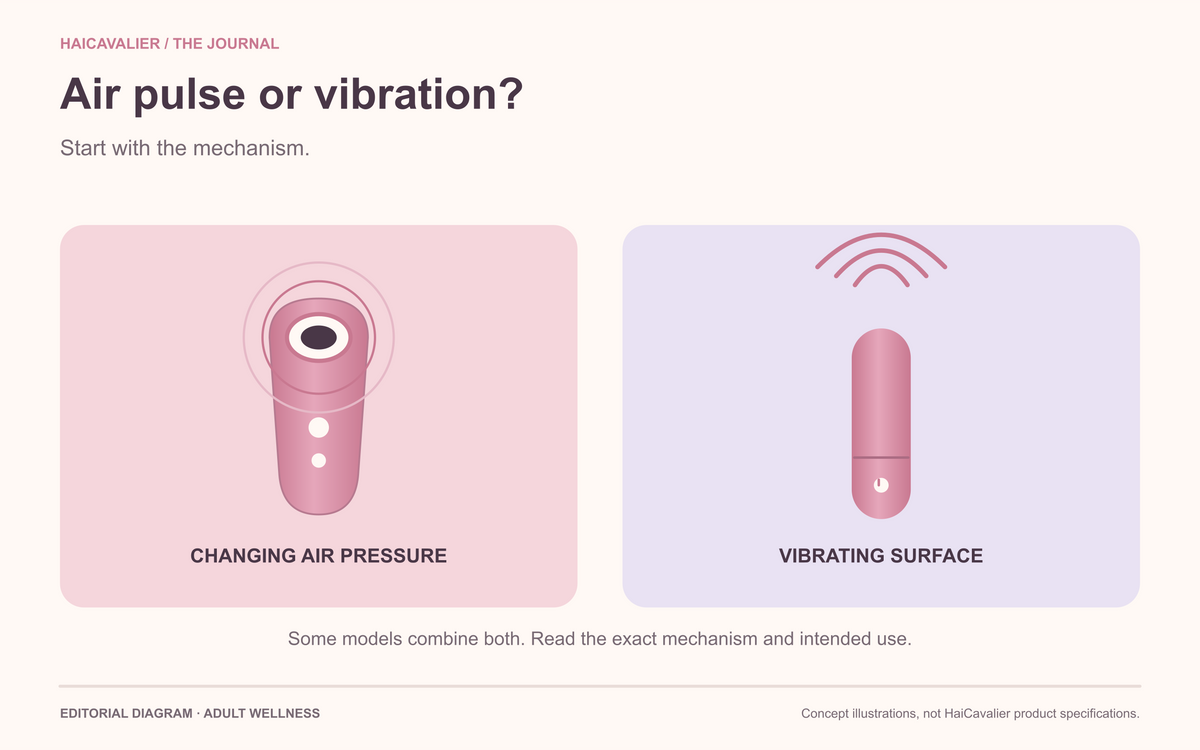
Air pulse and suction are often overlapping retail terms rather than two standardized technology categories. To compare them, identify what changes in the exact device: air pressure, a vibrating surface, mechanical movement or multiple functions.
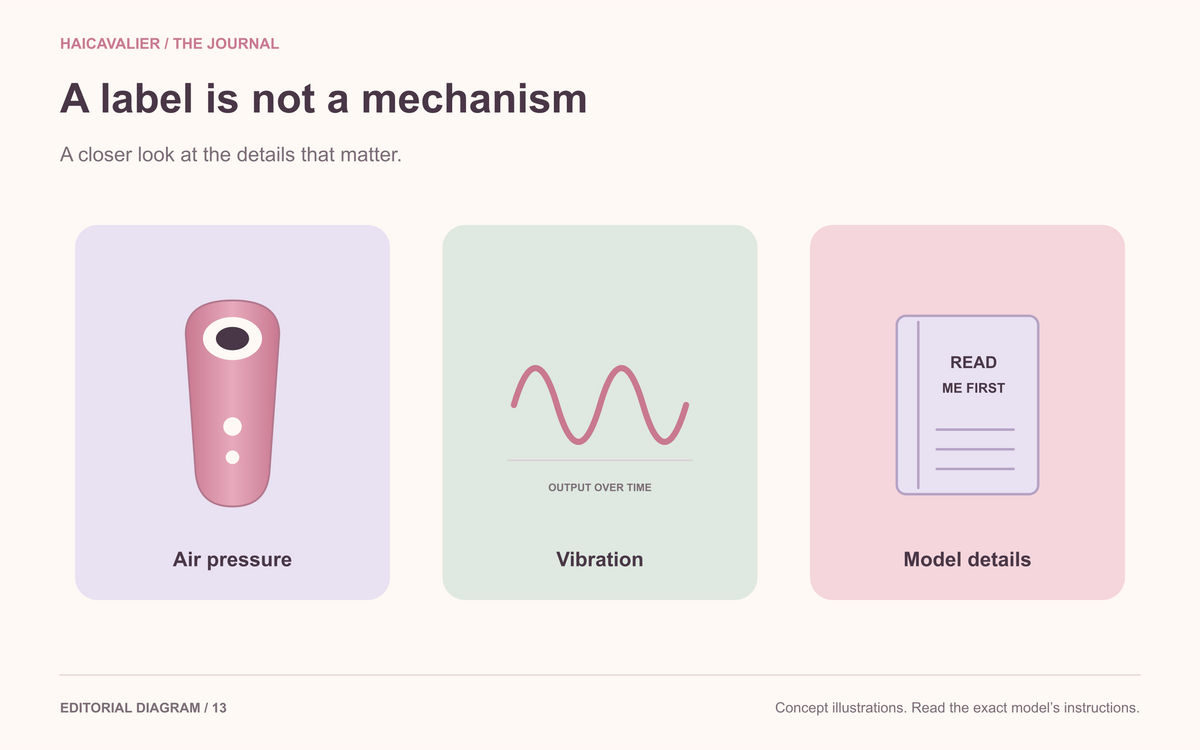
A more technical-sounding label does not establish a better mechanism.
Translate the product description
Many suction-style listings refer to changing pressure around an opening. Different manufacturers may describe their systems as air pulse, pressure waves or suction.
Read the actual explanation instead of assuming every similarly shaped device operates identically. A branded technology description applies to that manufacturer's system.
If the seller cannot explain the mechanism beyond its name, record the information gap.
Where does “sonic” fit?
Sonic may be part of a manufacturer's own product language. It is not enough to identify a universally shared mechanism, an independently measured frequency or a medical technology.
Ask what physically moves or changes, whether the product has a separate vibration function and which controls operate each function.
Do not infer ultrasound, treatment benefits or clinical evidence from the word alone.
Compare the opening and removable parts
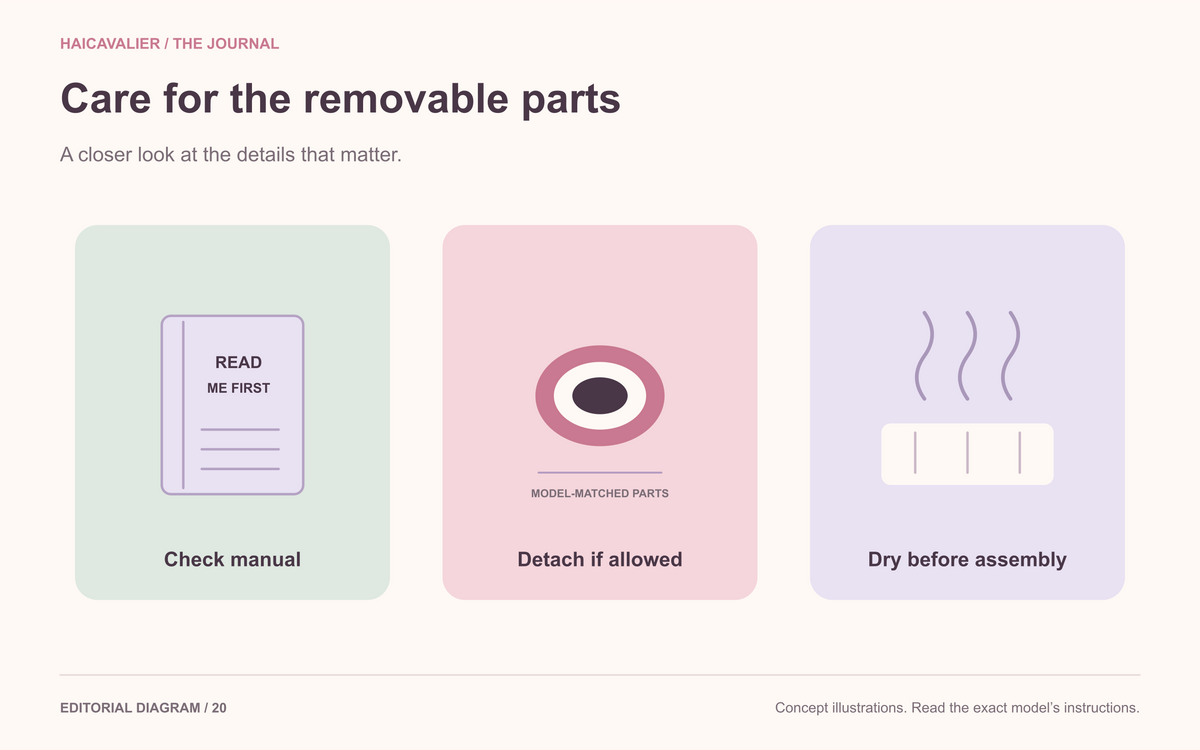
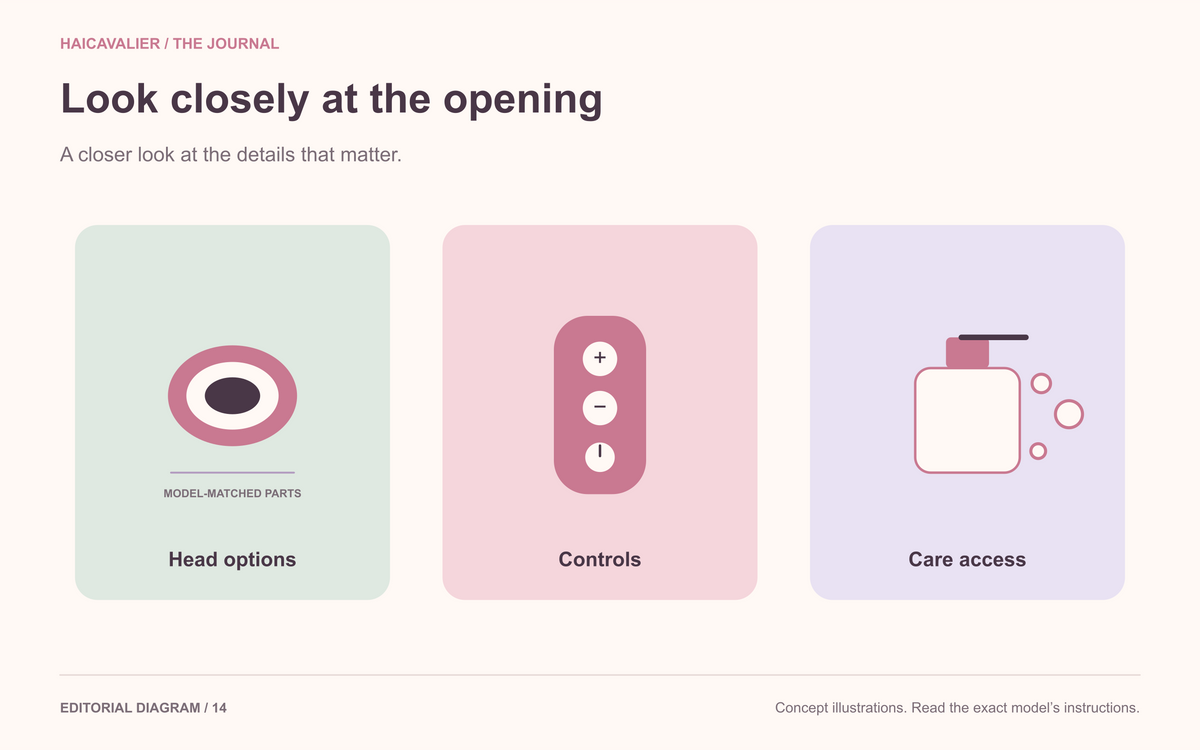
Look at the head shape and listed dimensions. Find out whether it detaches by design, whether alternatives are included and whether replacements are available.
Two openings that look alike can differ in size, construction and care. A seam is not permission to pull a sealed component apart.
This is where a manual or labeled diagram can resolve more than a category name.
Keep three comparisons separate
Mechanism: what the device does.
Interface: how you hold it and change its settings.
Maintenance: what can be washed, dried, removed or replaced.
Two differently named technologies may have similar ownership requirements. Two products using the same term may require very different routines.
Ask for a usable explanation
A practical support question is: “Does this model create changing air pressure, conventional vibration or both, and can the functions be controlled independently?”
Once you have that answer, compare actual dimensions, control sequences and care.
Descriptions of sensation and reviewers' preferences can provide context, but they cannot guarantee your response. Choose on the mechanism and ownership details you can verify.
Related reading
- Suction Vibrator vs. Regular Vibrator: How to Compare Them
- What Is a Clitoral Suction Toy? A Plain-English Guide
Technical example
Womanizer: its air-pressure system. This is one manufacturer's explanation, not a universal specification.