Buying Guides
Suction Vibrator vs. Regular Vibrator: How to Compare Them
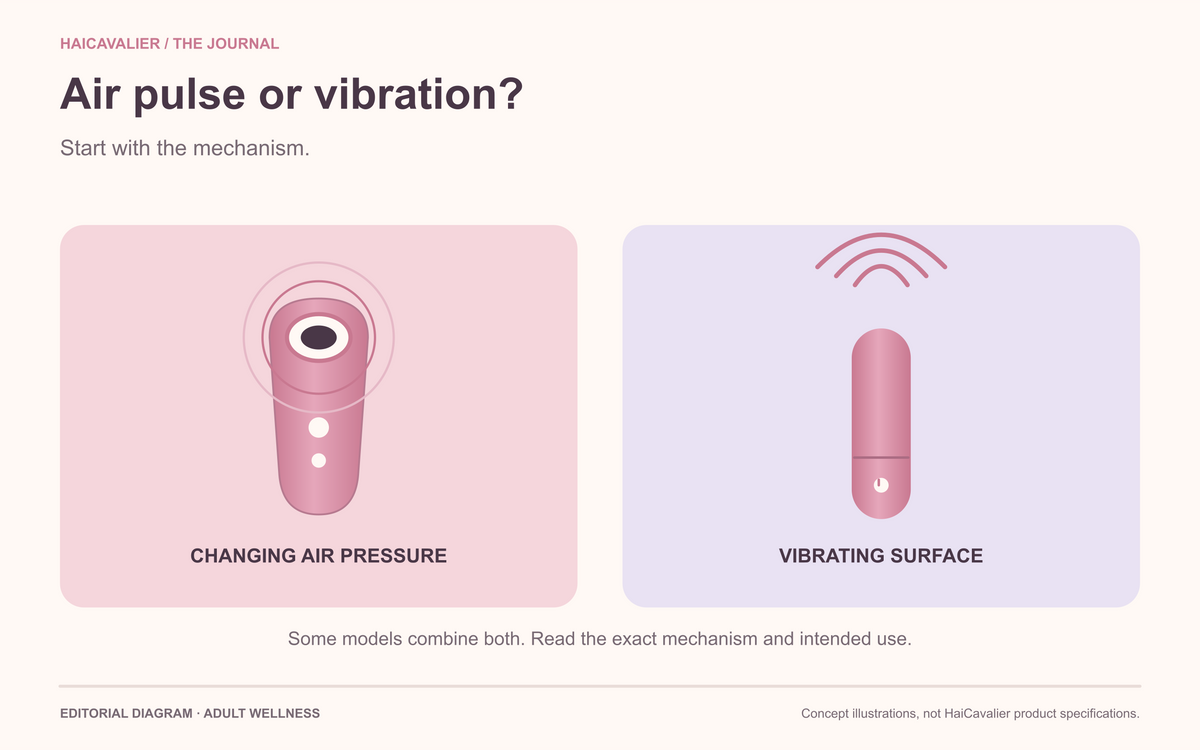
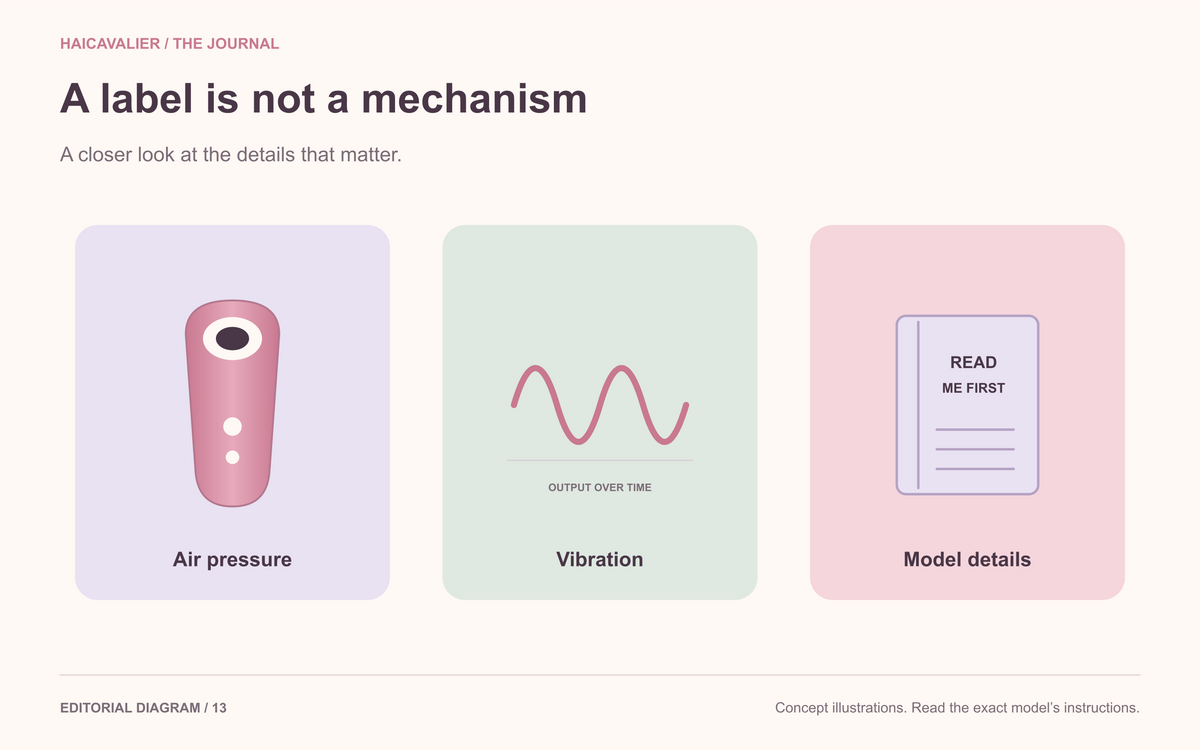
A suction-style device usually centers on an opening and a changing-air-pressure mechanism. A conventional vibrator transmits movement through a contact surface. Combination models may offer both, so confirm the mechanism of the actual product.
The practical comparison changes depending on whether your alternative is a bullet, a wand or another design.
Compare the interface first
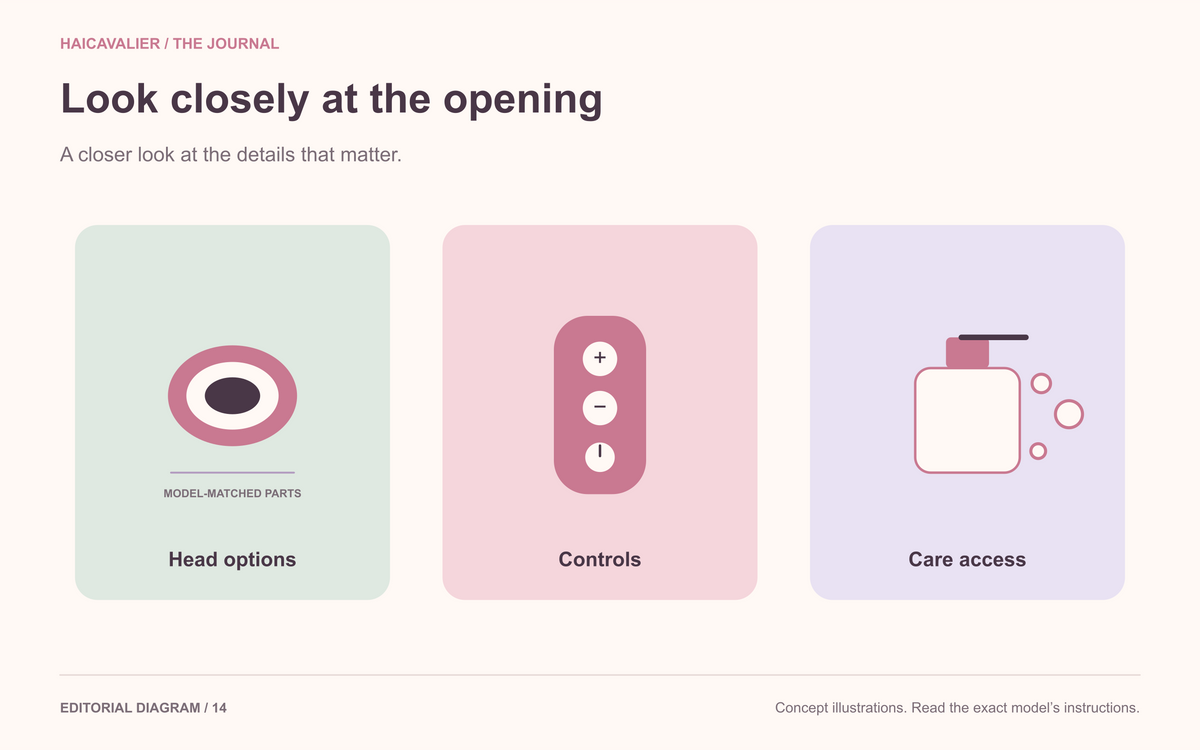
An air-pressure model has an opening whose shape, dimensions and care matter. A vibration-only model has a contact surface, which may be compact or broad.
A photograph cannot establish a universal fit. Find clear head views and the manufacturer's intended-use description.
Do not treat “regular vibrator” as one physical design: a small bullet and a long-handled wand make different handling demands.
Suction-style device versus bullet
Both may occupy little storage space. Compare the opening or contact area separately from overall length.
A bullet commonly has a compact body with limited space between the controls and contact surface. A suction-style model may place its opening at an angle to the grip. Check the back and side views to understand the difference.
Neither compactness nor the mechanism alone establishes a mild starting level.
Suction-style device versus wand
A wand typically separates a head from a handle. That can provide more holding space, while the head size, weight and power arrangement vary by model.
Check whether the wand is corded or rechargeable; then compare it with the complete suction-style kit, including its matching cable and removable pieces.
A large head is not a substitute for a stated intensity range, and a small opening does not establish a quieter device.
Read the control sequences
Find out how each product starts, lowers a setting and stops. Separate patterns from intensity levels.
For a combination model, ask whether air pressure and vibration can operate independently. A second mechanism is useful only if you want it and understand the interface.
Put the care requirements side by side
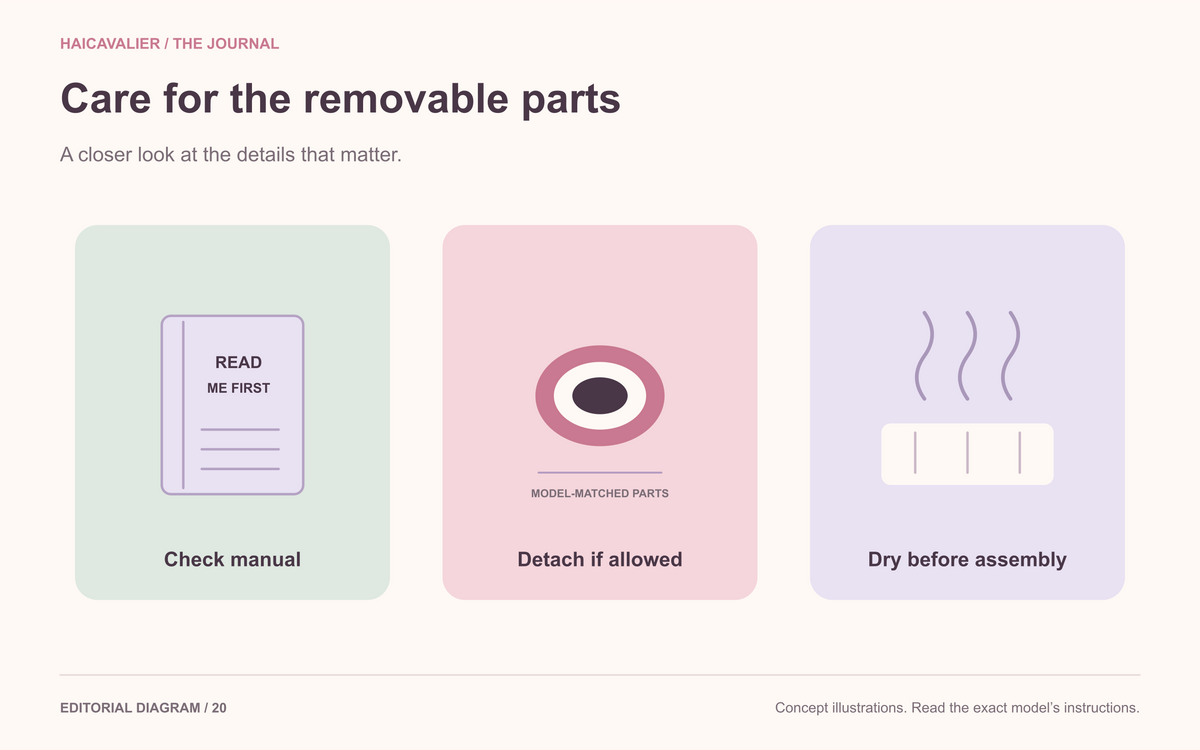
A removable head introduces cleaning, drying and replacement questions. A sealed vibration-only body has its own water-exposure limits.
Do not declare one category easier to clean without comparing the actual instructions. Likewise, noise, runtime and replacement-part availability are model-specific.
Make a choice without inventing a winner
If you specifically want to explore an air-pressure format, shortlist clearly described examples of it. If you prefer a vibration-only device, compare the grips and contact surfaces within that category.
No mechanism guarantees a particular personal response. A review can help explain ordinary ownership, but it cannot choose your preference.
Related reading
- What Is a Clitoral Suction Toy? A Plain-English Guide
- Different Types of Vibrators, Explained Without the Jargon
- What Makes a Vibrator Beginner-Friendly? Seven Details to Check
Technical example
Womanizer: one manufacturer's air-pressure technology. This describes that manufacturer's system, not every suction-style device or a HaiCavalier specification.