Care & Privacy
How to Clean a Vibrator Without Guessing
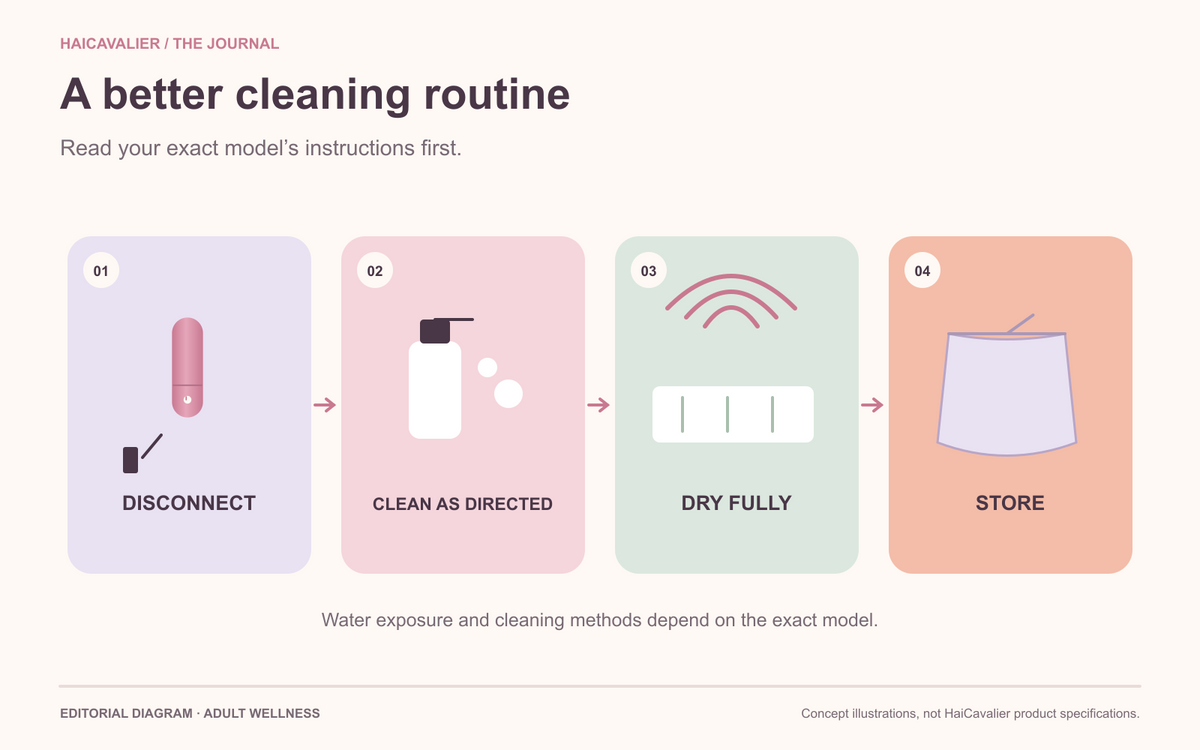
Clean a vibrator before and after use using the method allowed for that exact model. Disconnect power, inspect the surface, clean the permitted parts, remove residue as directed and let everything dry fully before storage or charging.
The important distinction is whether the assembled device can be washed, only wiped, or separated into parts with different care instructions.
Find the right cleaning branch
Washable body: use the specified water temperature and cleaner. Rinse only as permitted; a rinsing instruction does not necessarily permit soaking.
Wipe-clean body: follow the stated damp-cloth or cleaner method and keep liquid away from vulnerable openings.
Removable head: detach it only as instructed. Its care may differ from the handle. Do not force apart an apparently sealed join.
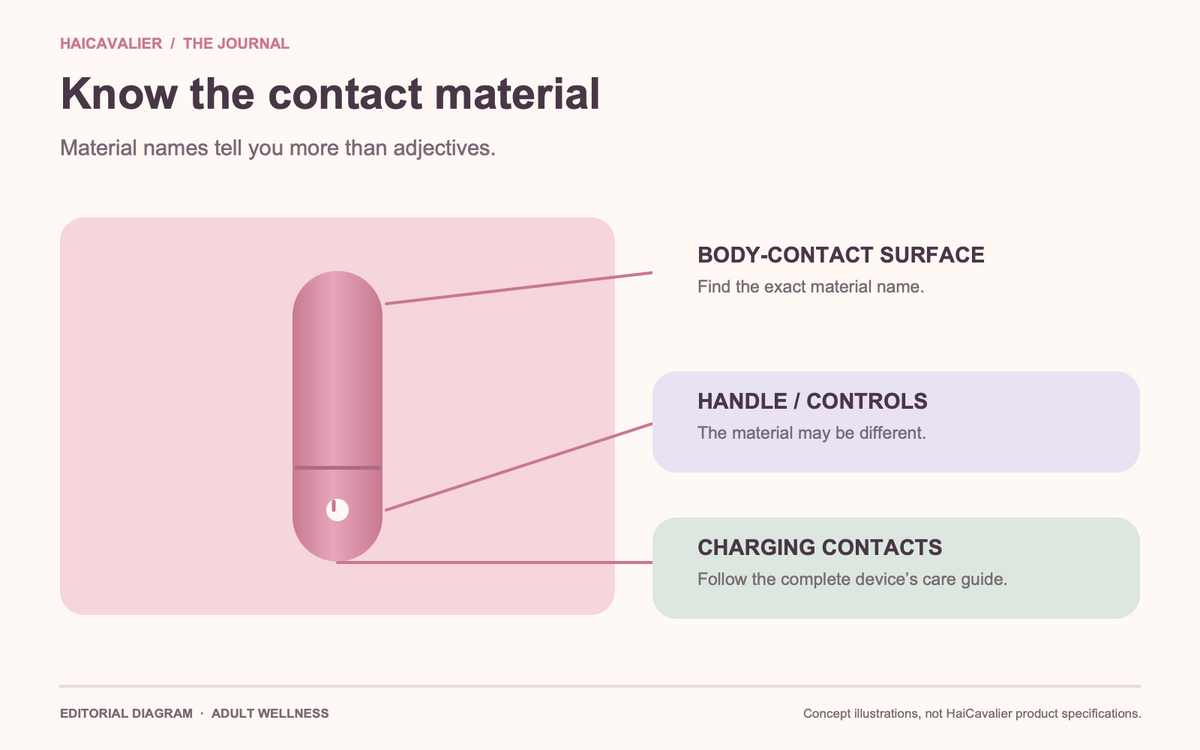
A silicone surface does not establish what the electronics, seals or adhesives tolerate. Use the finished product's instructions.
Clean the details without turning it into a repair
Switch off and disconnect the charging cable. Follow any directions for batteries designed to be removed by the user; leave integrated batteries alone.
Inspect seams, buttons and recesses. Remove residue using the approved method rather than scraping, forcing a port open or flooding an inaccessible chamber.
Healthcare guidance from Sexual Health St Helens recommends cleaning before and after use and paying attention to joins. The model's manual tells you how to do that without damaging the device.
Dry before you close, store or charge
Let the device and permitted removable parts dry in a clean place as instructed. Check recesses as well as the outer surface.
There is no universal ten-minute drying time. If a head has a cavity, a dry exterior does not show that the cavity is dry.
Reassemble only as directed, then put the product into clean, dry storage. Keep the matching cable separate from damp components.
Does “sanitize” mean the same as “clean”?
No. Removing residue is not the same as proving disinfection or sterilization. A product's material name does not authorize boiling, alcohol, bleach, a dishwasher or a UV accessory.
Use only treatments explicitly supported by the device and cleaning-product instructions. Follow any specified concentration, contact time and rinsing requirements; do not invent a recipe.
A spray is not automatically a substitute for washing. Read what the spray is intended to do and whether that method is approved for your model.
When routine cleaning is not the answer
If the surface cracks, peels or becomes unexpectedly sticky, pause use and contact the manufacturer. Extra cleaner or a coating cannot repair it.
For sharing or a specific infection concern, get appropriate health advice rather than assuming ordinary cleaning establishes safety.