Lifestyle
Why Product Design Matters in Intimate Wellness
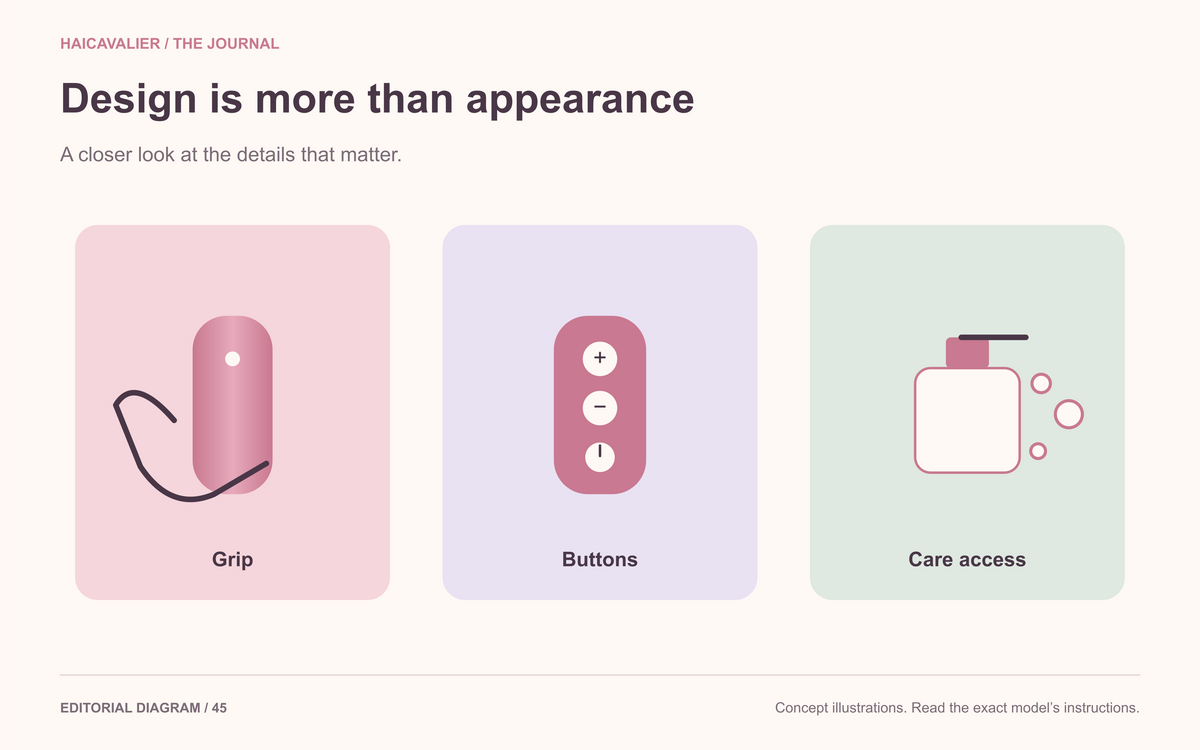
In intimate wellness, product design affects how easily an adult shopper can understand, handle and maintain an object. Appearance is one part; grip, controls, care access and usable information are others.
Judge the design through specific tasks rather than treating a playful shape as evidence of original engineering or better performance.
Appearance can make a category feel approachable
A soft color, simple line or playful shape can appeal to an adult shopper who dislikes the presentation of a conventional product category.
That preference is legitimate. You do not have to choose a clinical-looking object to take the purchase seriously.
The visual style should still be accompanied by clear material, function and care information.
Grip changes the ordinary experience
Look at the available handle area, balance and weight. Consider where the fingers would rest and whether a button is easy to reach.
A small object can be awkward to hold. A larger one can be easier to manage while taking more storage space.
A claim of ergonomic design is a prompt to inspect those details, not proof that one shape suits every person.
Buttons are part of the design
Compare control spacing, symbols and sequences. Can you understand on, off, up, down and pattern changes?
If a product has several functions, the mapping between buttons and functions should be clear.
A clean-looking interface can still be confusing if the instructions do not explain what happens after a press.
Care access deserves attention
Decorative details can introduce joins or narrow areas. Removable components can change the cleaning routine.
Look for a diagram showing what comes apart and what remains sealed. The design should be evaluated together with the actual care directions.
A smooth photograph does not establish that a surface is easy to maintain.
Product information has a design job too
Photographs should show scale, relevant angles and useful details. A box-contents list should distinguish included accessories from styled props.
Readable instructions and clear labels help the customer understand the object. They are not decorative extras.
A beautiful page that hides the button panel has missed an important opportunity to help.
Keep design claims honest
A brand can select attractive products, unify photography and improve the shopping experience without claiming it invented every shape.
HaiCavalier’s current emphasis is on playful selection, clear guidance and a considered brand experience. A particular feature or original-design claim should be supported by actual evidence.
You can enjoy the appearance and still ask practical questions. The strongest design earns attention twice: first through how it looks, then through how well its details make sense.
Use the product page as a design task
Try to locate three things without guessing: a clear back view of the controls, the full box-contents list and the model's care instructions.
If one is missing, the page has made an ordinary task harder even if the photography is attractive.
This is a useful distinction for a brand using selected existing product designs. Original photographs, clearer documentation and a considered shopping experience are real improvements; they should be described accurately without claiming an invented mechanism or exclusive shape.