Buying Guides
USB Rechargeable vs Battery-Powered Vibrators
Compare rechargeable vibrators with models using user-replaceable batteries by the routine they require: approved charging equipment versus a supply of specified replacement cells.
Both are battery-powered. The important distinction is whether the battery is built in, designed for user removal or serviceable only through the manufacturer.
Clarify what “battery-powered” means
Rechargeable devices also contain batteries. In shopping comparisons, “battery-powered” often means a model with batteries the user replaces.
Read the listing carefully. Find out whether the battery is built in, user-removable or replaceable only through a service process.
Do not assume a sealed rechargeable device opens because another model does. A visible seam is not an instruction to take it apart.
Think about access to power
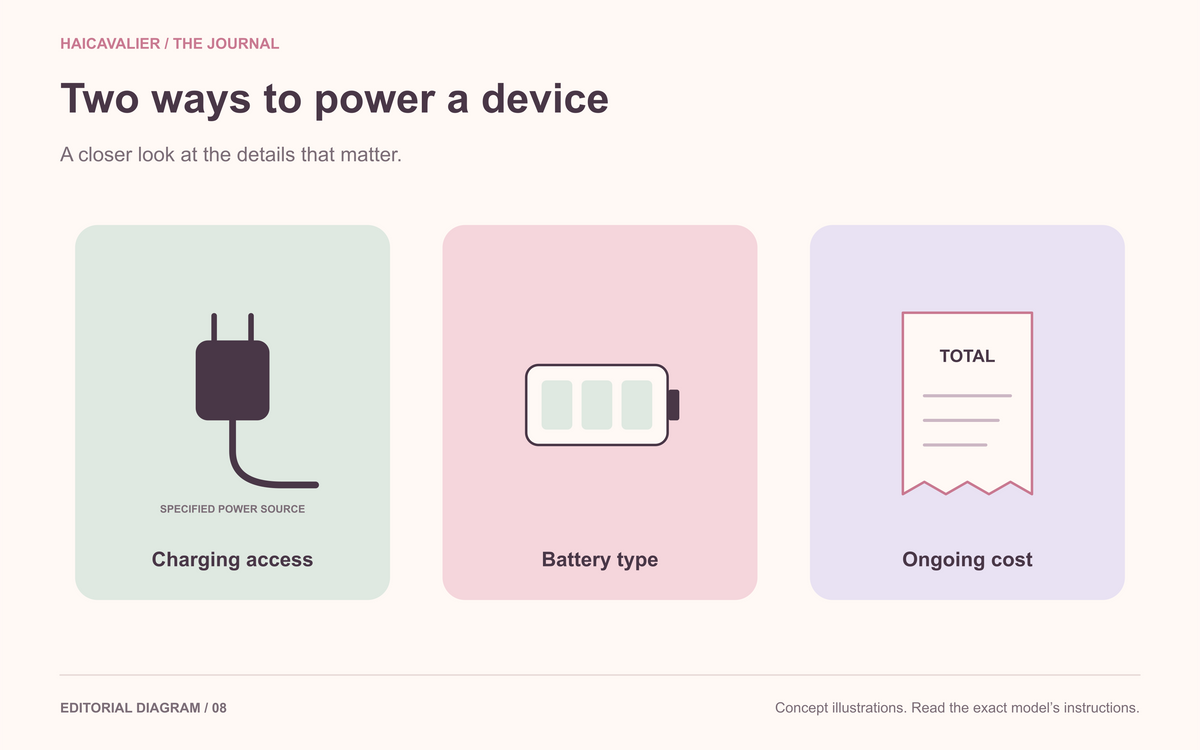
A rechargeable model needs a compatible cable and approved power source. That can be convenient at home, provided the matching cable is easy to find.
A replaceable-battery model needs the specified battery type. It may suit someone who prefers a device without a proprietary charging connector, but it creates a supply to keep track of.
Neither arrangement eliminates planning. It changes what you need to remember.
Check the included items
For a rechargeable product, confirm whether the cable and wall adapter are included separately. For a replaceable-battery product, check whether batteries are supplied.
Read the instructions before selecting replacements. Battery size, chemistry and permitted rechargeable alternatives are model-specific.
Do not infer compatibility because two batteries share a familiar shape. Use the specifications the manufacturer provides.
Compare ongoing effort and cost
Rechargeable models can avoid repeated purchases of disposable batteries, but a lost cable or a nonserviceable battery can matter later.
Replaceable-battery models involve replacement cost and an appropriate disposal routine. The significance depends on how you use and maintain the device.
Instead of inventing a lifetime cost estimate, list the costs you can verify: replacement batteries, an official cable, any required adapter and available service.
Consider storage and travel
Follow the manual for storage during long breaks. If it calls for removing user-replaceable batteries, do so as directed. Do not attempt the same procedure on an integrated battery.
Travel rules depend on battery type, whether it is installed and the route. Consult the current screening authority and airline guidance rather than treating either power system as automatically travel-ready.
Keep the product and necessary accessories protected from accidental activation and damage.
Choose the system you will keep organized
If you reliably keep cables labeled, rechargeable may feel simpler. If you prefer replaceable batteries, choose a model with clear specifications and an accessible compartment designed for that purpose.
The power system should fit your habits. It should not turn every recharge or replacement into a guessing exercise.
Make an ownership-cost comparison without guessing
For a rechargeable candidate, record the price and availability of an approved replacement cable. For a replaceable-cell candidate, record the required battery type and the cost of a suitable pack.
Do not convert those figures into annual savings unless you have a realistic replacement schedule. Different settings and usage patterns make a made-up schedule misleading.
Also record what happens when a part fails. A device with user-replaceable cells and one with a sealed battery can have very different service options.